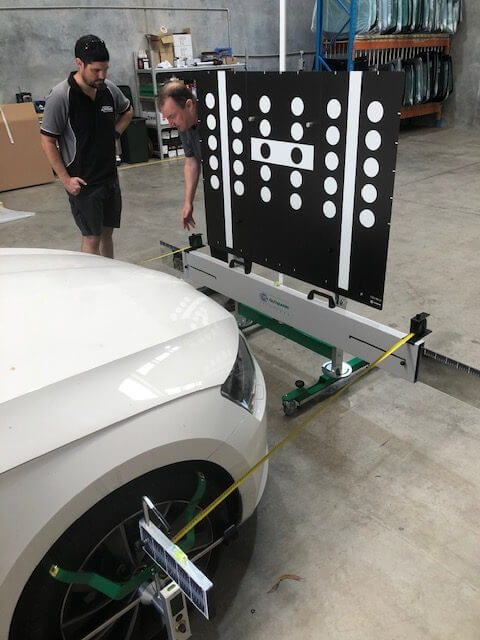
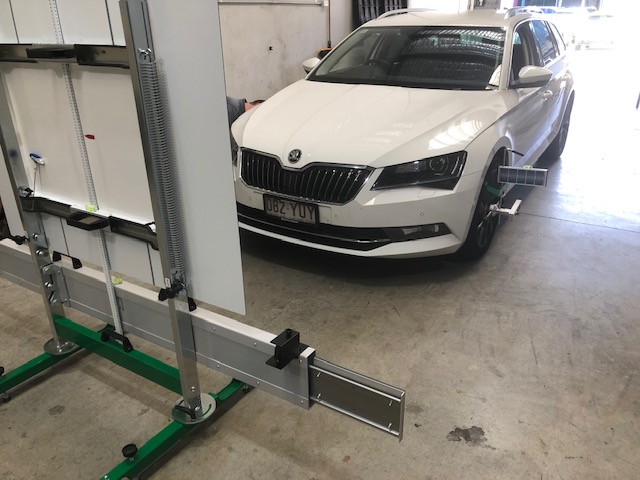
ADAS stands for Advanced Driver Assistance Systems — the cameras and sensors that quietly help you drive. On most cars built in the last decade, the main forward-facing camera sits behind the rear-view mirror, looking out through the windscreen. So what is ADAS calibration? It's the process of aiming that camera to the manufacturer's exact specification.
What ADAS actually controls
If your car has any of these, it almost certainly relies on a camera (and sometimes radar) that needs to be aimed precisely:
- Lane-keep / lane-departure assist
- Autonomous emergency braking (AEB)
- Adaptive cruise control
- Traffic-sign recognition
- Blind-spot monitoring
Why a new windscreen needs calibrating
The camera is mounted to a bracket bonded to the glass. Replace the windscreen and that camera moves — even a fraction of a degree is enough to throw off how it reads the road. An uncalibrated camera can misjudge lane position and distances, so lane-keep might tug the wrong way or auto-braking might react late. That's why a windscreen replacement on an ADAS-equipped car isn't finished until the camera is recalibrated.
Does your car need it?
As a rule of thumb: if your car is roughly seven years old or newer and has lane-keep assist, AEB, adaptive cruise or traffic-sign recognition, the answer is almost certainly yes. The quickest way to be sure is our ADAS calibration page — it has a two-question checker that tells you in seconds, or just send your rego or VIN and we'll confirm it.
Static vs dynamic calibration
Some cars calibrate statically — parked in the workshop, using manufacturer targets set to precise distances. Others need a dynamic calibration on a road drive, and some need both. We identify which yours requires and do it in-house on HELLA Gutmann equipment, so there's no second trip to another shop and no driving around uncalibrated in between.
The result is a car whose safety systems read true — backed by a pass report before you drive away.